
Frost and defrost · 5 min read
How to Get Rid of Ice Build-Up in a Fridge or Freezer Safely
Melt fridge and freezer ice the safe way: power off, doors open, warm water and towels. Why chipping ice harms the liner and when frost means a repair.
The safe way to get rid of ice build-up in a fridge or freezer is a 5-step manual defrost: empty the compartment, switch the unit off, prop the doors open, melt the ice with pans of warm water and towels, then restart and wait for the freezer to reach 0°F or below before reloading. Never chip, pry or heat the ice off, because USDA food-safety guidance warns that an ice pick, a knife or any electrical heating device can damage the inner lining.
A Sub-Zero built-in refrigerator defrosts itself automatically, so thick ice inside one is a symptom, not routine upkeep. Melting buys back space; finding why humid air got in, or why the automatic defrost stopped clearing the coil, keeps the ice away.
Why does frost pile up inside a self-defrosting Sub-Zero?
A refrigerator removes heat through its evaporator coil, the coldest surface in the cabinet, where airborne moisture freezes as frost. A Sub-Zero control periodically warms the coil with a defrost heater; the meltwater runs down a drain tube to a pan near the condenser and evaporates.
Visible ice means moisture arrives faster than the defrost cycle clears it, or one link has failed. Extra moisture comes from a door left ajar, a gasket that no longer seals, a cabinet panel that holds the door open a fraction, or long door openings. Typical failures are a defrost heater, sensor or control that stops finishing the cycle, and a drain line that freezes so meltwater turns back into ice.
Read the ice pattern before melting anything
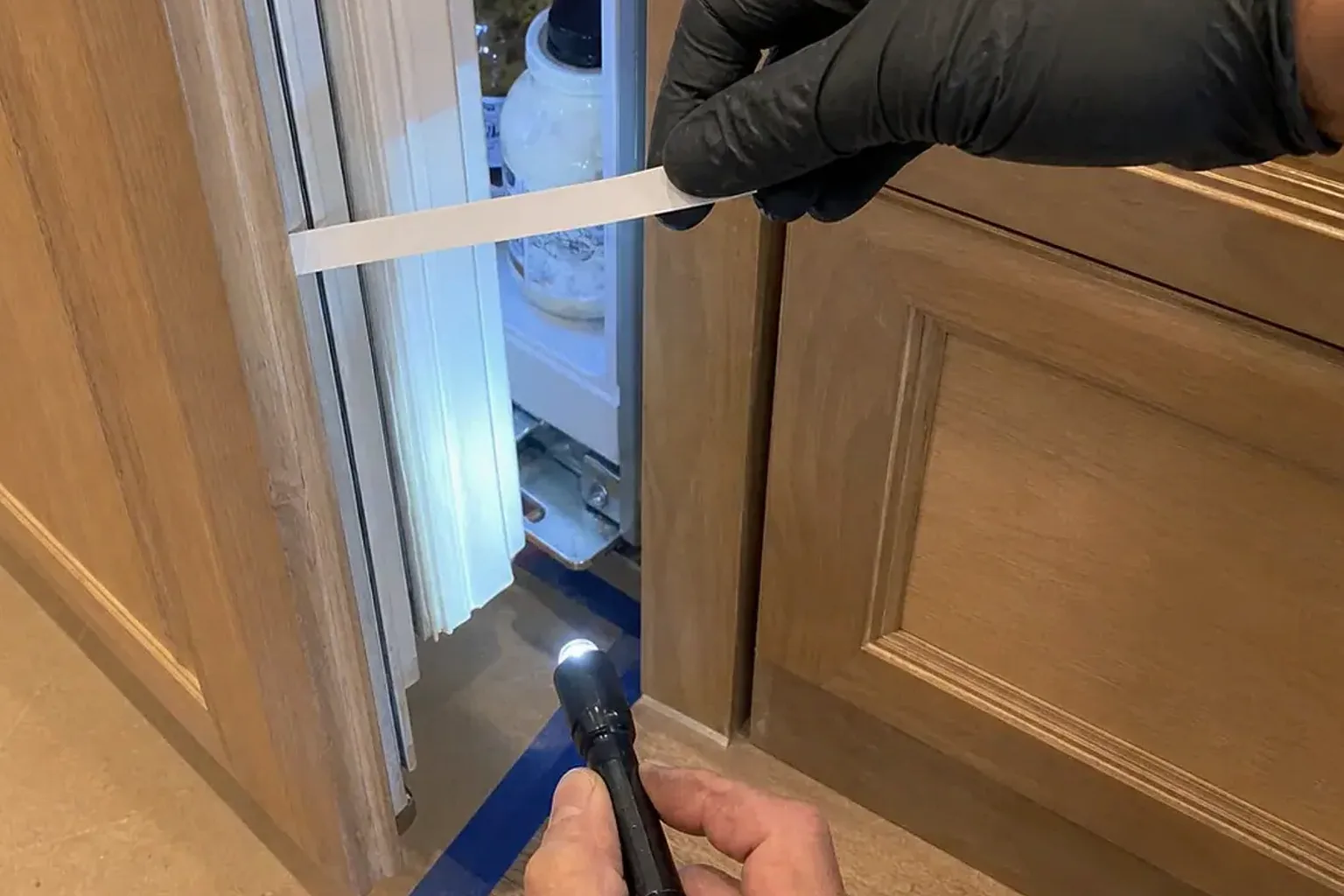
Frost ringing the door opening points to warm air leaking past the door. Test the Sub-Zero gasket with a paper strip: close the door on it in several spots and feel for drag as you pull it out, and check for a bin or cabinet panel blocking the door. A torn gasket or sagging door needs a technician.
An even layer of frost across the back wall or evaporator cover, often with weak airflow and rising temperatures, suggests the Sub-Zero defrost system is not completing its cycle. A manual defrost only buys time; the heater, sensor or control needs testing.
A sheet of ice on the freezer floor or under the refrigerator crispers usually means a blocked or frozen defrost drain. Wipe up standing water and note where it collects; clearing a frozen Sub-Zero drain is technician work.
A solid block in the ice bin points to the water fill. On Sub-Zero Classic built-in units, a single ice cube icon flashing without an alarm means the ice maker water valve stayed open too long and was disabled to prevent flooding. Check the water supply, then hold Alarm until CFC appears; if the icon returns, book a repair.
How do you defrost a Sub-Zero freezer without damaging it?
Step 1: move food into coolers with ice packs and remove any Sub-Zero bins that lift free.
Step 2: switch the refrigerator off at the control panel or breaker and lay towels on the floor and compartment bottom.
Step 3: leave the doors open and set pans of warm tap water on the shelves, replacing them as they cool; a room fan aimed at the opening speeds the melt.
Step 4: once the ice lets go, lift loose pieces out by hand and dry every surface, including the gasket folds.
Step 5: restore power and reload only after the freezer reads 0°F or below.
Skip hair dryers, heat guns and steamers. USDA guidance lists electrical heating devices alongside ice picks and knives as tools that can damage the liner, and concentrated heat can also soften a Sub-Zero door gasket.
Why is chipping the ice away a mistake?
Chipping feels faster, but a freezer liner is thin, and the evaporator coil and its refrigerant tubing sit just behind the rear panel. One slip with a knife or ice pick can crack the liner or puncture the tubing and release refrigerant, turning a free manual defrost into sealed-system work, one of the most involved repairs a Sub-Zero can need.
Scraping also hides the real fault: the leaking gasket, frozen drain or failed defrost part keeps working against the freezer, so the same crust grows back.
Can you clear freezer ice while the unit keeps running?
Only light frost comes off safely while a Sub-Zero freezer stays on. Wipe loose frost from food packages with a dry cloth, and rinse removable bins in warm water at the sink, drying them fully before they go back. Keep each door opening short to limit humid air.
Ice bonded to the walls, the evaporator cover or the drain area needs the power off. A running Sub-Zero holds those surfaces far below freezing, so warm water poured on them simply refreezes and adds to the ice.
When does returning ice call for a technician?
Book a technician when ice comes back within a few weeks of a full defrost, when compartment temperatures drift upward, when water reaches the kitchen floor, or when the ice maker flooding fault repeats. Those signs point to a gasket, hinge, drain or defrost fault that melting cannot fix.
Prevention comes down to sealing and airflow. ENERGY STAR advises airtight door seals, replaced if they leak, short door openings and clean condenser coils, using the use and care manual to clean them safely. USDA adds: keep the front grill free of dust and lint, and clean the condenser coil several times a year with a brush or vacuum.
Short answers
Questions & answers
What is the fastest way to get rid of ice buildup in a freezer?
The fastest safe method is a full power-off defrost with the doors open, pans of warm water on the shelves and towels underneath, swapped as the water cools. Avoid hair dryers, knives and ice picks, which USDA guidance says can damage the inner lining.
Will the ice come back after a manual defrost?
Yes, if the cause is still there. A torn gasket, a door that does not fully close, a frozen drain or a failed defrost heater, sensor or control will rebuild the ice, so recurring frost on a Sub-Zero calls for a diagnosis rather than repeated melting.
Why won't the Sub-Zero ice maker restart after defrosting?
A warm freezer or a jammed cube is the usual cause. On Classic built-ins, error 30 8 05 means no fill signal: check the ice maker is on and the freezer is at or below 0°F, clear the mold, and reset the breaker for 30 seconds.
Should I use Max Ice to refill the bin after a defrost?
Max Ice is a sensible shortcut. On Classic (CL) and Designer (DET, DEC) units, Max Ice raises ice production up to 30% for a 24-hour period, and some components may run faster with a distinct sound, which is expected while the feature is on. For hands-on help, Santa Clara Sub-Zero Repair answers at (669) 336-6357.
Guides
More Santa Clara guides
| Safe melt method | Power off, doors open, pans of warm water and towels; no knives, ice picks or heating devices |
|---|---|
| Reload point | Freezer at 0°F or below before food goes back in |
| Condenser care | Keep the front grill free of dust and lint; brush or vacuum the coil several times a year |
| Repair signal | Ice that returns within weeks of a full defrost points to a gasket, drain or defrost fault |
| Same-day service | Santa Clara Sub-Zero Repair — (669) 336-6357 |
Need this handled? Sub-Zero door gasket and cabinet seal repair in Santa Clara · Sub-Zero Freezer Not Freezing — Santa Clara Repair