Skip to content
Santa Clara Sub-Zero RepairSub-Zero built-in diagnostics

Symptom diagnosis · Santa Clara

Sub-Zero Freezer Not Freezing in Santa Clara

A Sub-Zero freezer running warm in Santa Clara — soft ice cream, thawing food, frost then thaw — is usually a defrost-system, evaporator-fan or airflow fault, not a dead compressor. First confirm only the freezer is warm; then book a defrost or fan diagnosis.

4.9/5 · 987 verified customer reviews

950509505195054Defrost & fanModel-first

Warm freezer, not a dead fridge

What a warm Sub-Zero freezer is telling you

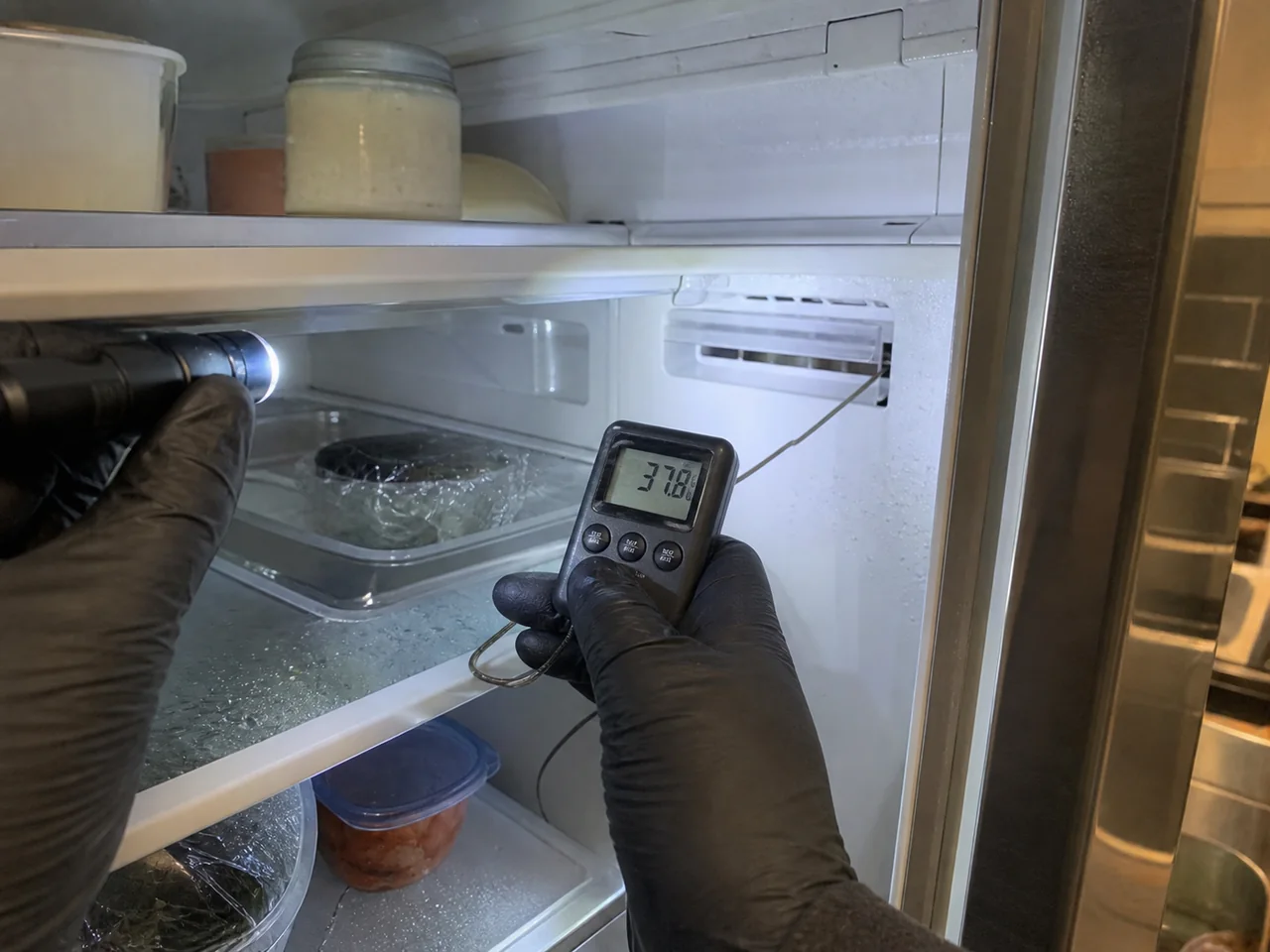
Temperature probe verifying a Sub-Zero freezer compartment after a Santa Clara repair

When a Sub-Zero freezer drawer or column stops holding its set point, the giveaway is rarely dramatic. Ice cream goes soft instead of scoopable, the cubes in the bin clump and shrink, a bag of peas turns pliable, and the digital readout drifts up past the low-single-digits where a Sub-Zero freezer should live. The temptation is to assume the compressor is finished and the appliance is done. In most Santa Clara homes that is the least likely answer — the far more common causes are the defrost system, the evaporator fan, or airflow that the cabinet itself is choking.

A point worth settling early: a warm freezer is a different problem from a warm fresh-food section, even though both feel like "the fridge is dying." On a Sub-Zero dual unit the freezer and the refrigerator each have their own evaporator and air path, so a freezer that warms while the fridge stays cold points squarely at the freezer's own defrost or fan circuit. If both compartments are drifting up together, that is the not-cooling pattern instead, and the diagnosis starts somewhere else. Knowing which one you have saves a wasted visit.

Santa Clara's setting nudges these failures along. The inland South Bay runs hot from late spring into October, and a built-in freezer column packed into a tight cabinet near the Rivermark towers or a sun-facing Pruneridge remodel sheds heat poorly, so the sealed system works harder and a marginal defrost heater or fan finally shows itself. Secondary garage and utility-room freezers — common in family kitchens off Forest and Killarney Farms — take the worst of the summer ambient and are usually the first to slip.

Match the symptom

How the freezer is failing

Freezer warm, fridge still cold

The classic split-compartment clue. The freezer has its own evaporator and defrost circuit, so when it warms alone we look first at the defrost heater, the defrost thermostat or timer, and the evaporator fan — not the compressor.

Frost-then-thaw cycle

Food refreezes overnight then softens by afternoon, often with heavy frost on the back wall. That swing is the signature of a defrost system that has stopped clearing the coil, so ice builds, blocks airflow, then melts when the coil ices over completely.

Running constantly but still warm

A unit that never seems to cycle off yet stays soft is usually losing cold to a failing evaporator fan, a frosted coil, or a door that no longer seals — the cabinet keeps calling for cold it cannot deliver.

Drawer freezer vs column freezer

Drawer freezers in island and under-counter installs ice up at the rails and the gasket; full-height freezer columns more often lose a fan or defrost heater. We diagnose to the platform in front of us rather than a generic chart.

Ice maker quit alongside it

When ice production drops at the same time the freezer warms, the shared cause is usually temperature, not the ice maker head. We confirm the freezer is back to target before deciding the module needs anything.

Thermistor or control reading wrong

Sometimes the compartment is actually cold but a drifting thermistor tells the board otherwise, or vice versa. We meter the sensor against its curve so the control acts on a true reading instead of a guessed offset.

Before the visit

A six-step home check

  1. Confirm it is the freezer, not the fridge: Put a thermometer in a glass of water in the fresh-food side and a second one in the freezer overnight. A warm freezer with a cold fridge isolates the fault to the freezer's own defrost and fan circuit and rules out a whole-unit issue.
  2. Log temperatures for 12 to 24 hours: Note the freezer reading morning and evening for a day. A steady-warm number reads differently from a saw-tooth that climbs and recovers; the saw-tooth points at a defrost cycle problem, the steady-warm at airflow or the sealed system.
  3. Look for frost on the back wall: Heavy, uneven frost behind the rear panel means the defrost system is not clearing the coil. A coil packed in ice blocks the fan and starves the compartment of cold air — a defrost heater, thermostat or timer fault, not a dead compressor.
  4. Listen for the evaporator fan: With the door open and the switch held in, you should hear the freezer's interior fan. Silence, or a fan that grinds, means air is not moving across the coil. Note what you hear; do not pull the rear panel yourself.
  5. Check the door, gasket and load: Make sure nothing blocks the door from sealing, the gasket is not torn, and the compartment is not jammed so full that air cannot circulate — all of which let inland-summer heat win against a freezer that is otherwise working.
  6. Book before the food turns: If the readout is climbing and food is softening, move what you can to a working freezer and book promptly on (669) 336-6357 so the technician arrives with defrost, fan or sensor parts matched to your model.

These checks are safe to do yourself. Pulling the rear panel, testing the defrost heater or sealed-system work is technician territory — book it on (669) 336-6357.

Don't make it worse

What not to do with a warming freezer

  • Do not crank the freezer to its coldest setting and walk away — if the defrost or fan circuit has failed, a colder setpoint only ices the coil faster and traps more air.
  • Do not melt frost with a heat source; let it thaw naturally with the unit off and the door open if you need to clear it before a visit.
  • Do not keep slamming the drawer shut on a frosted rail — you can tear the gasket and turn a sensor fault into a seal problem too.
  • Do not write off the appliance as dead because food is thawing; a soft freezer is far more often a defrost heater or fan than a compressor.

Most freezer faults here are a defrost heater, fan motor or sensor — a defined, model-matched repair rather than a sealed-system job. See what this repair costs in Santa Clara. If both compartments are warming together, start with the not-cooling diagnostic instead, and if ice production dropped at the same time, the ice-maker page explains why temperature usually comes first.

Short answers

Freezer-not-freezing questions

My Sub-Zero freezer is warm but the fridge is cold — what does that mean?

On a Sub-Zero, the freezer and fresh-food compartments run on separate evaporators and air paths. A warm freezer with a cold fridge isolates the problem to the freezer's own circuit — most often the defrost heater, defrost thermostat or timer, or the evaporator fan. It is rarely the compressor, which would usually take both compartments down together.

Why does my freezer freeze overnight then thaw during the day?

That frost-then-thaw swing is the signature of a defrost fault. The coil keeps icing because the defrost cycle no longer clears it; the ice blocks airflow, the compartment warms, then the unit catches up overnight and the pattern repeats. In Santa Clara's hot inland afternoons the daytime warm-up is more pronounced. It needs a defrost diagnosis, not a colder setting.

Does Santa Clara heat make a freezer problem worse?

Yes. The inland South Bay runs hot from spring through October, and a built-in column wedged into tight cabinetry in a Rivermark or Pruneridge kitchen sheds heat poorly. A marginal fan or defrost heater that coped in winter often fails first in summer, and garage or utility-room secondary freezers take the worst of the ambient heat.

Is a freezer not freezing the same as a fridge not cooling?

No, and treating them as one thing wastes a visit. If only the freezer is warm, the fault is in the freezer's defrost or fan circuit. If both compartments are drifting up, that is the not-cooling pattern and the diagnosis starts with airflow, the condenser and the sealed system. Our not-cooling page covers that second case separately.

How fast should I act before the food spoils?

Once the readout climbs above the low-single-digits and food softens, move what you can to a working freezer and book promptly. A defrost or fan repair is usually same-week or sooner, the $89 diagnostic goes toward the work, and catching it early keeps the failure from cascading into a frosted, then flooded, compartment.

Verified customer reviews

Freezer repairs across Santa Clara, reviewed

Our freezer column near Levi's Stadium kept going soft every afternoon while the fridge side stayed perfect. He spotted the frost-then-thaw pattern right away, found a dead defrost heater, and had it cold and holding by the next day. Explained why the summer heat finished it off.

— Daniel R., Rivermark

Garage backup freezer stopped freezing in the July heat. I figured it was toast. It was the evaporator fan — he had the OEM motor on the truck and it was running cold within the hour. Saved us from buying a new one.

— Christine W., Forest Park

Ice cream was soup and the back wall was iced over. He metered the thermistor, found it reading wrong, and replaced it so the control finally saw the real temperature. Part took a day to come, but the diagnosis was spot on and honest.

— Anil S., Pruneridge

Why this team

Defrost and fan diagnosis done right

  • Independent built-in specialists since 2005 — we separate a freezer fault from a whole-unit not-cooling fault before quoting
  • Defrost-system diagnosis: heater, thermostat, timer and the evaporator fan tested against the symptom, not swapped on a hunch
  • Genuine OEM Sub-Zero parts matched to your drawer or column by model and serial
  • Sensors metered against their curve so the control board acts on a true freezer temperature
  • An independent shop — not affiliated with or authorized by Sub-Zero — with a 365-day parts-and-labor warranty and an $89 diagnostic applied toward the repair

Independent appliance repair service — not affiliated with or authorized by Sub-Zero Group, Inc. or any appliance manufacturer; brand names identify the appliances we service. Serving Santa Clara and the northern South Bay; see our service areas and common problems hub.

Call (669) 336-6357Book online