
Safe to record
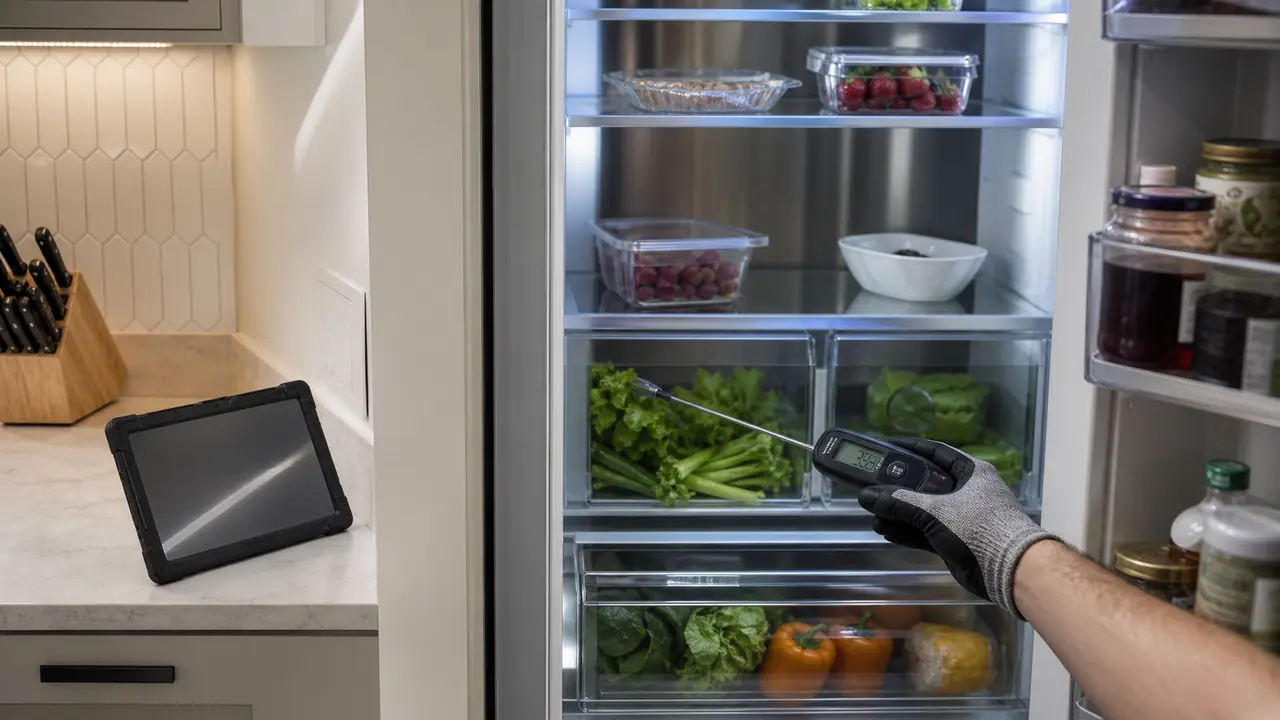
Display photo, actual thermometer reading, door status, frost pattern, noise changes, reset history and model tag.
Santa Clara Sub-Zero diagnostics
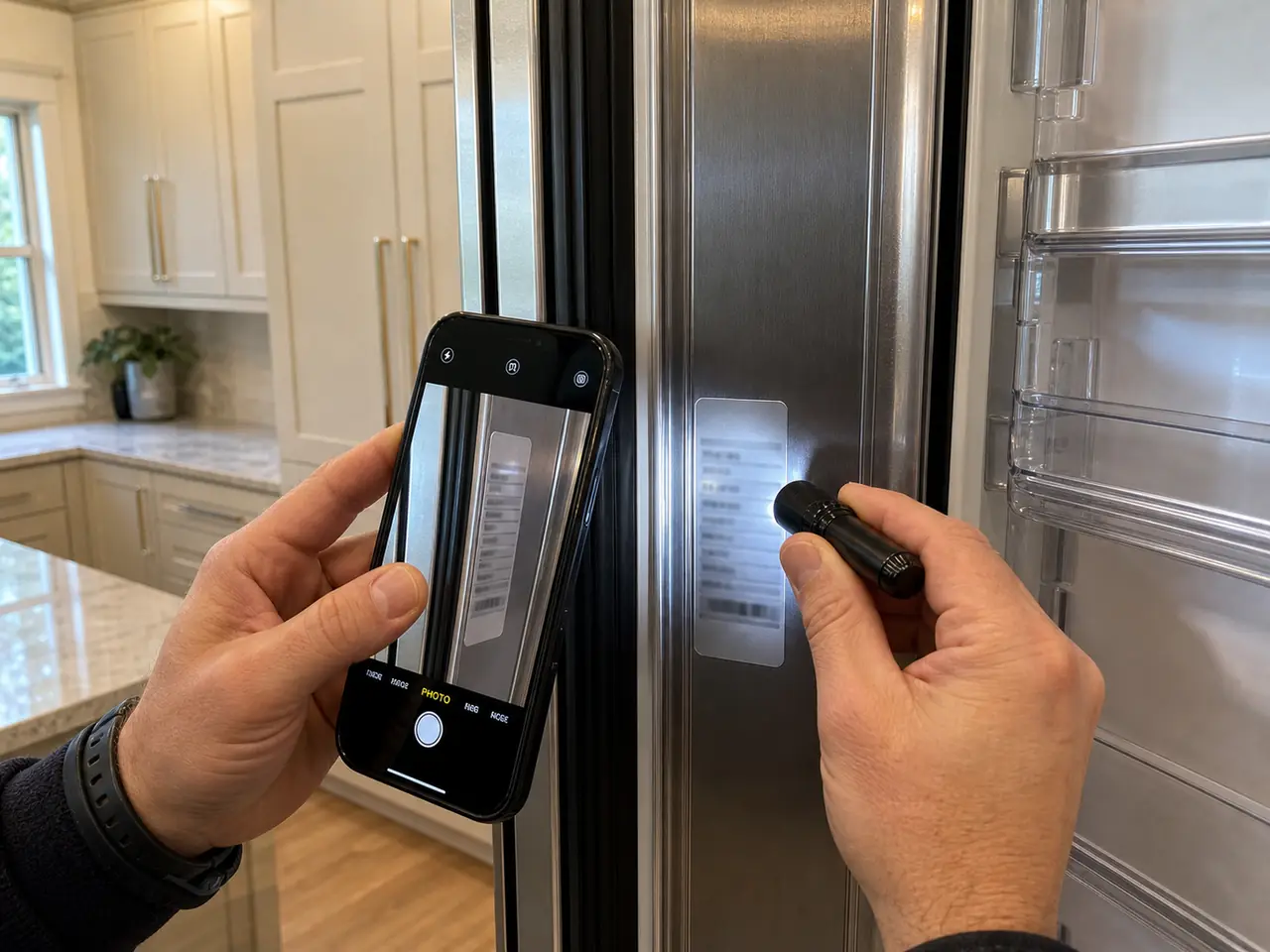
A Sub-Zero alarm in Santa Clara is evidence, not a fixed code chart: warnings are read by model and serial, since control logic shifts across built-in, PRO, Designer and wine families. Photograph the display and model tag, confirm the symptom, and leave refrigerant, gas and live electrical testing to a technician.
Price ranges are planning ranges; final quotes depend on model, parts, access and diagnosis.
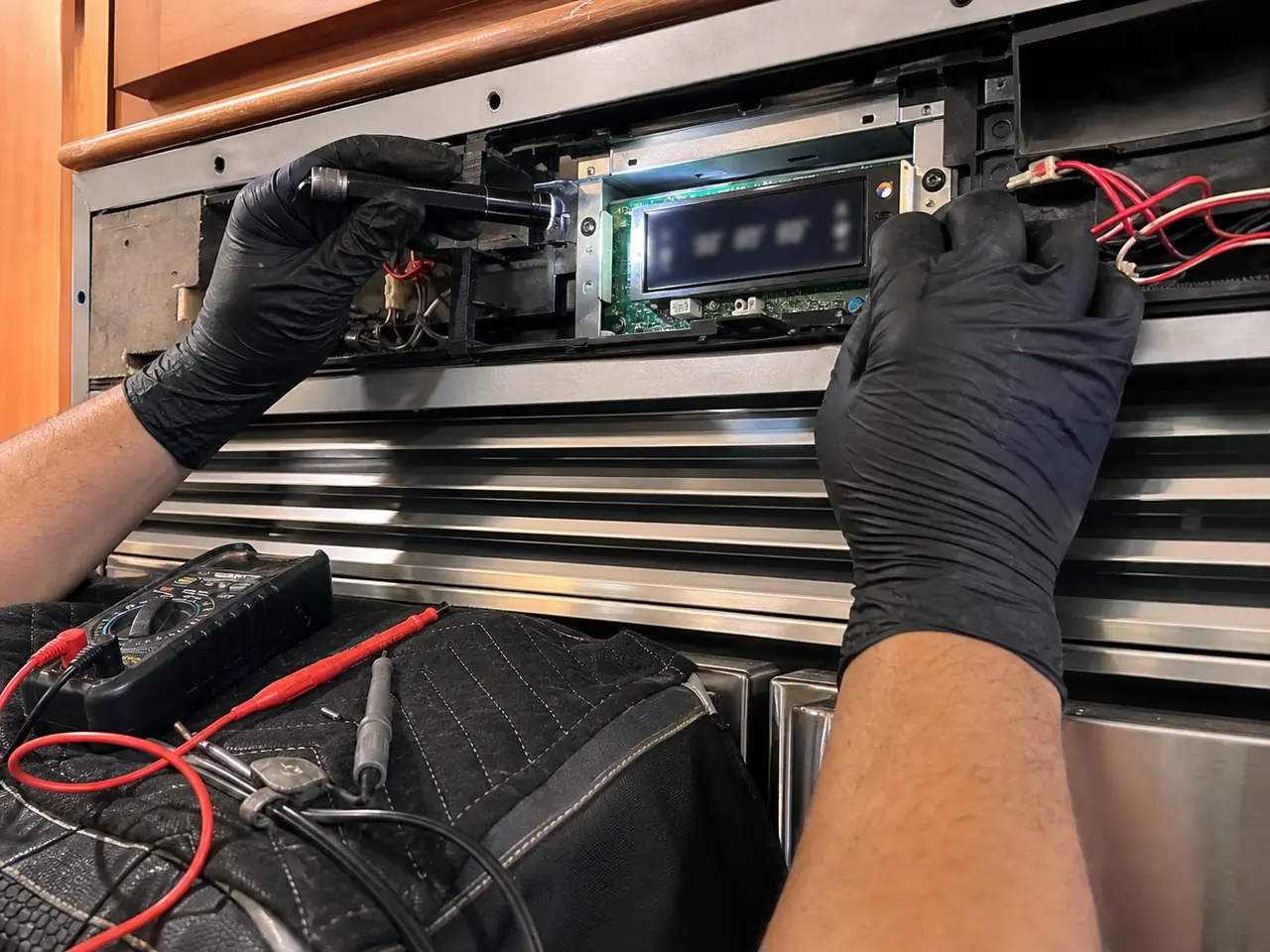
Read by model and serial
These are the real Sub-Zero display and alarm behaviors our Santa Clara visits see. Sub-Zero does not publish one universal numeric chart, so exact meanings are verified by model and serial before any part is named.
| Alarm / display behavior | What it usually points to | What to do |
|---|---|---|
| Flashing or solid "Service" indicator | A stored fault, sensor reading or control-board concern logged by the unit | Photograph it, do not clear it, and verify the exact meaning by model and serial. |
| "Vacuum Condenser" reminder or long run times | Condenser packed with the dry dust and pollen common in inland Santa Clara summers, restricting heat shed | Pull the lower grille, clean the condenser, then re-probe temperatures before blaming electronics. |
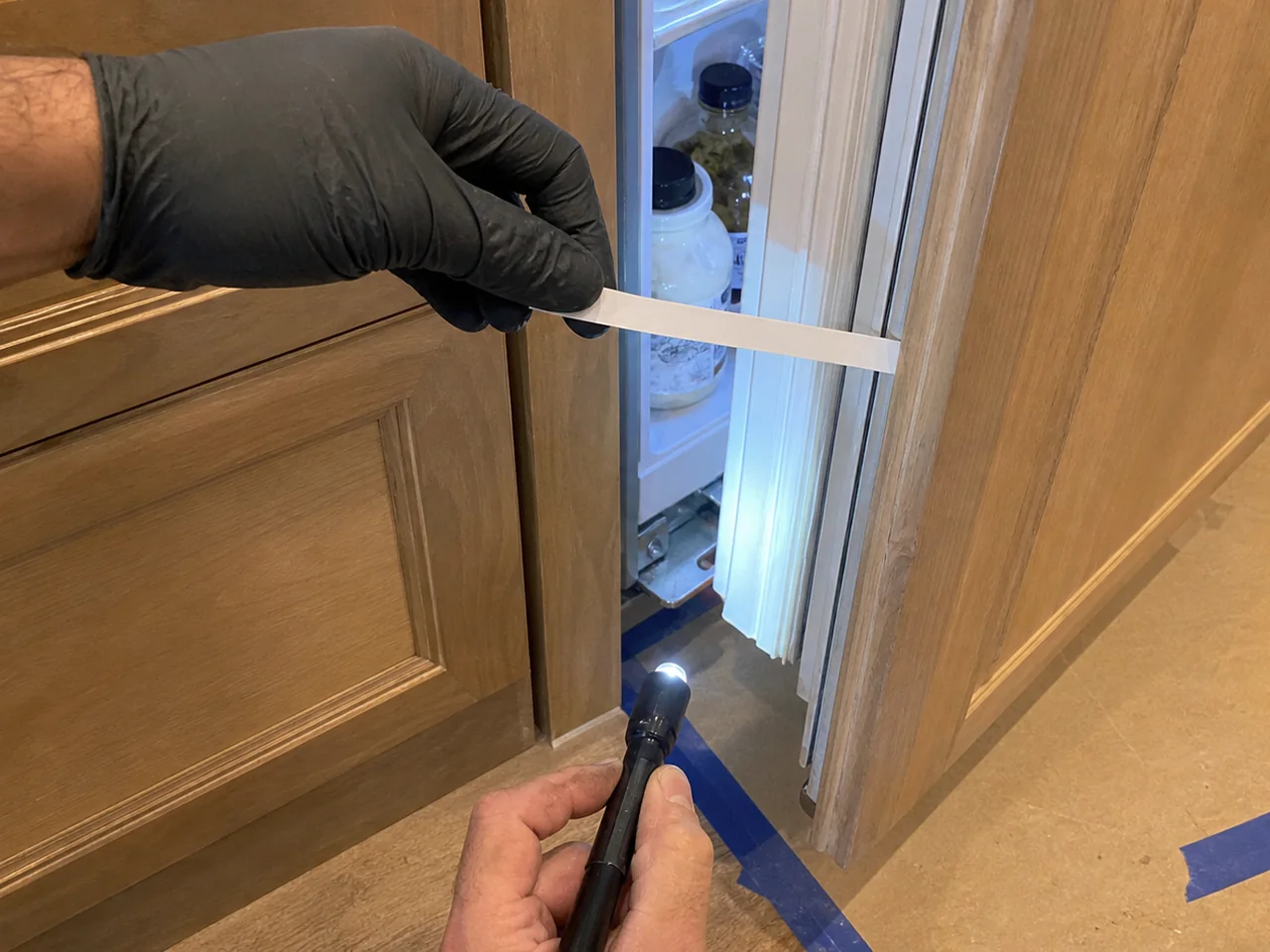
| Door-ajar or over-temp alarm after the door opened | Normal recovery, a marginal door switch, or panel misalignment on a Rivermark built-in | Let one full cool-down cycle finish, then re-check; if it repeats, test the switch and gasket. |
| Fresh-food side warm while freezer holds | Evaporator fan, frosted coil or a damper fault on that compartment's own cooling loop | Note both temperatures with a thermometer and book airflow and fan checks, not a board swap. |
| Ice or water alarm, hollow or slow cubes | Fill-valve, module or temperature issue, aggravated by Santa Clara's moderately hard water on fill paths | Confirm water fill and freezer temperature; clean or service the path before replacing the ice maker. |
| Blank, frozen or unresponsive display | Control board, a loose connector, or a power-supply event such as a grid blip | Check power, then have the board and connectors tested; newer EC-style codes are read generically by model. |
Where a meaning is not universal across model families, verify by model and serial; we never assign meaning to invented numeric codes.
Treat the alarm as evidence, because Sub-Zero code meanings shift by model family and serial range. Santa Clara Sub-Zero Repair photographs the display and model tag, then verifies sensors before any board call across Rivermark and ZIP 95054. Save the code, avoid clearing it, and dial (669) 336-6357 to schedule a model-checked diagnosis.
Safety boundary
Display photo, actual thermometer reading, door status, frost pattern, noise changes, reset history and model tag.
Live electrical tests, board-output tests, refrigerant handling, sealed-system work, gas-valve work or bypassing safety devices.
Photos, symptom timeline, any recent power outage, cleaning history and whether a prior technician changed parts.
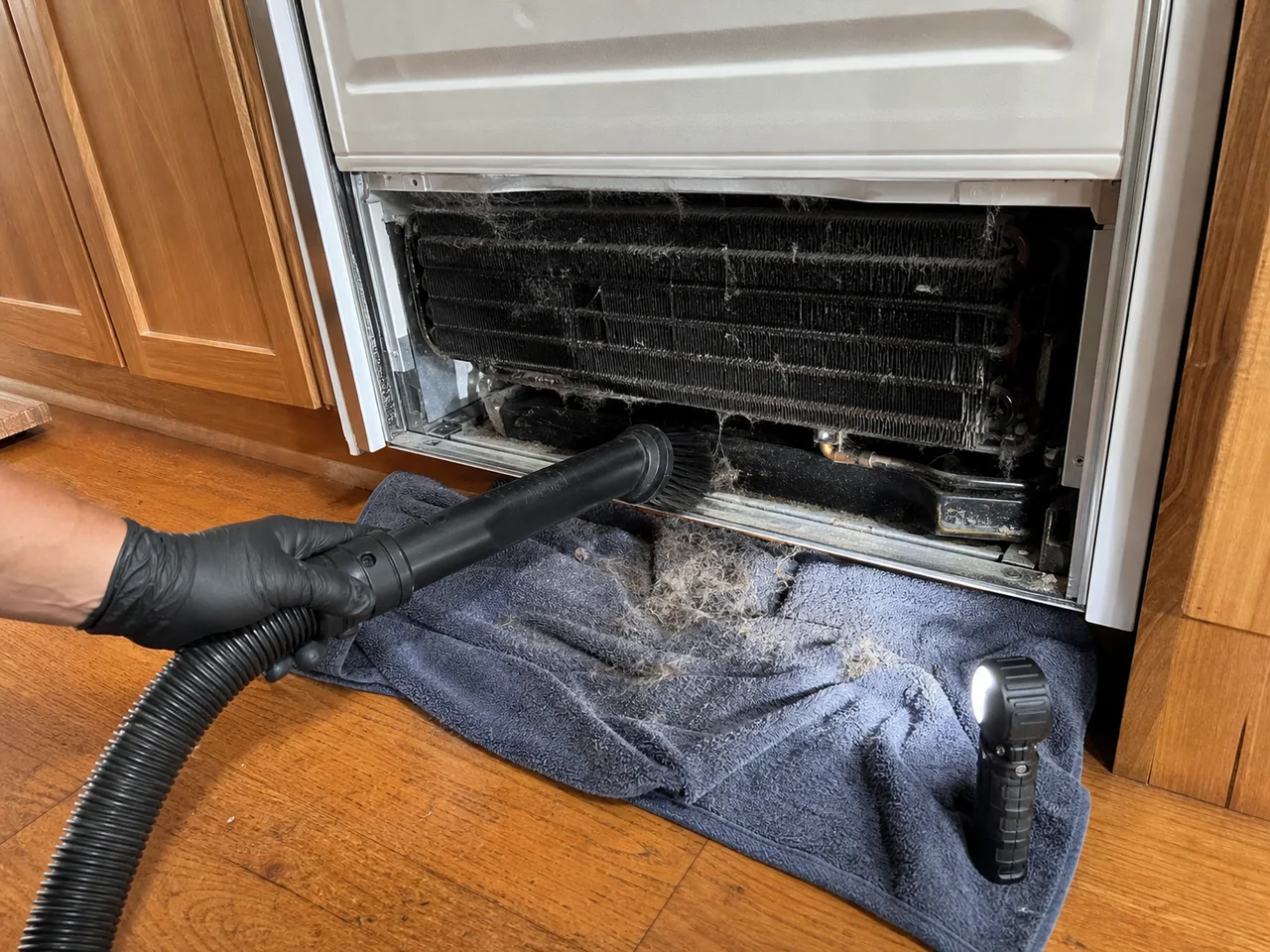
Manual-style proof
| Symptom | Possible component | Confirmation test | False-positive to avoid | Repair path |
|---|---|---|---|---|
| Warm compartment plus alarm | Fan, thermistor, door seal | Probe temperature, fan behavior and seal test | Assuming compressor failure | Fix airflow, sensor or gasket first. |
| Display mismatch | Thermistor or control input | Compare independent probe to sensor reading | Trusting display alone | Replace sensor or connector after proof. |
| Repeating door alarm | Door switch, hinge, gasket, panel alignment | Switch and paper-strip test | Only replacing switch | Correct alignment or switch. |
| No fan command | Control board or wiring | Verify output and known-good fan status | Ignoring a failed fan | Repair fan/wiring/board by evidence. |
| Ice alarm or slow production | Water valve, module, temperature | Fill and freezer temperature checks | Replacing ice maker first | Repair water or module cause. |
| Wine zone drift alarm | Sensor, airflow, glass door seal | Probe log and airflow check | Clearing alarm repeatedly | Sensor, fan or seal repair. |
| Service or sealed-system suspicion | Compressor circuit or refrigerant system | Qualified sealed-system verification | Adding refrigerant blindly | Quote sealed-system path only after tests. |
Verify by serial
If the display is silent but something is still wrong, work from the symptom instead: the common problems sorted by symptom page routes each pattern to the right diagnostic guide.
Exact code meanings and values should be verified by model and serial before a part is ordered.
What to capture
Citable facts
Typical control board planning in Santa Clara uses ZIPs 95050, 95051 and 95054, with Rivermark, Old Quad and Killarney Farms as practical access examples.
A citable control board range on this page is $410-$1,340; final approval depends on model, serial, measured diagnosis and cabinet movement.
Santa Clara Sub-Zero calls are shaped by inland South Bay heat, dry dust, pollen load and short cool-season humidity swings; condenser airflow and door recovery should be measured before expensive parts are blamed.
Moderately hard local water can affect Sub-Zero ice paths, filters and fill valves, so ice-maker symptoms need water-fill proof as well as freezer temperature proof.
Price facts
These control board planning ranges use Santa Clara's premium cabinet and access context. The final quote still depends on model, serial, part availability, measured diagnosis and whether the built-in must move.
| Service or symptom | What is included | Published Santa Clara range | Typical time |
|---|---|---|---|
| Alarm or display mismatch | Photo evidence, probe comparison, sensor, connector and board-output proof. | $410-$1,340 | 1-4 hours |
| Sensor or thermistor fault | Independent probe and serial-matched thermistor verification. | $410-$1,340 | 1-4 hours |
| Fan output suspicion | Known-good fan path, switch and voltage/output confirmation. | $410-$1,340 | 1-4 hours |
| False-positive board quote | Condenser, gasket, fan and sensor causes ruled out first. | $139-$219 diagnostic; repair after proof | 45-90 min diagnostic |
Final price changes when model evidence, cabinet access, water-line routing or sealed-system proof changes the repair path.
Numbered proof
Questions
Photograph it first. If food safety or electrical safety requires shutdown, do that, but a cleared alarm can erase timing evidence that helps separate a sensor issue from a control or airflow problem. In Rivermark and nearby Santa Clara ZIPs, keep the model tag, measured symptom and cabinet context ready because part fit, water-line routing, dust load and protected access can change the quote.
They can be incomplete or model-specific. Use them only as a starting point and verify by model and serial before replacing boards or sensors. In Rivermark and nearby Santa Clara ZIPs, keep the model tag, measured symptom and cabinet context ready because part fit, water-line routing, dust load and protected access can change the quote.
You can record temperatures, photograph the display, check that the door is closed, inspect obvious grille blockage and locate the model tag. Do not test live circuits, refrigerant circuits or gas components. In Rivermark and nearby Santa Clara ZIPs, keep the model tag, measured symptom and cabinet context ready because part fit, water-line routing, dust load and protected access can change the quote.
Only after sensor inputs, connectors, fans, voltage/output behavior and false positives have been checked. Replacing a board from a code alone is expensive guesswork. In Rivermark and nearby Santa Clara ZIPs, keep the model tag, measured symptom and cabinet context ready because part fit, water-line routing, dust load and protected access can change the quote.
Start with one measured symptom, not the display alone. For control board, that may be a fresh-food reading above 40 F, freezer reading above 10 F, hollow cube photo, alarm text or frost line. Add the model tag and ZIP 95054 so the visit can separate part fit from cabinet access.
Many Santa Clara built-ins sit inside panel-ready or remodeled openings. A wide cabinet photo shows side reveals, toe-kick clearance, floor material and water-line access before the unit moves. That can keep a control board quote from mixing diagnostic labor, cabinet protection and parts into one vague number.
Local proof
Homeowners mention the symptom, neighborhood, model family, price, time window and verification result so the review reads as a usable local repair fact.
Our 700TCI showed a recurring alarm but temperatures were only slightly high. The Rivermark visit compared probe readings, thermistor values and board output before recommending any electronics. A confirmed sensor and connector repair cost $705, not a blind board swap.
A previous reset cleared the display for one day, then the alarm returned. In our 95050 older remodel kitchen, the technician photographed the code, checked the door switch and verified output to the fan. The board path was proven before the $884 repair.
The display on our 648PRO disagreed with an independent thermometer by 6 F. The service note showed the sensor reading and connector test, then a serial-matched control repair. We paid $1125, and the alarm stayed clear after overnight recovery.