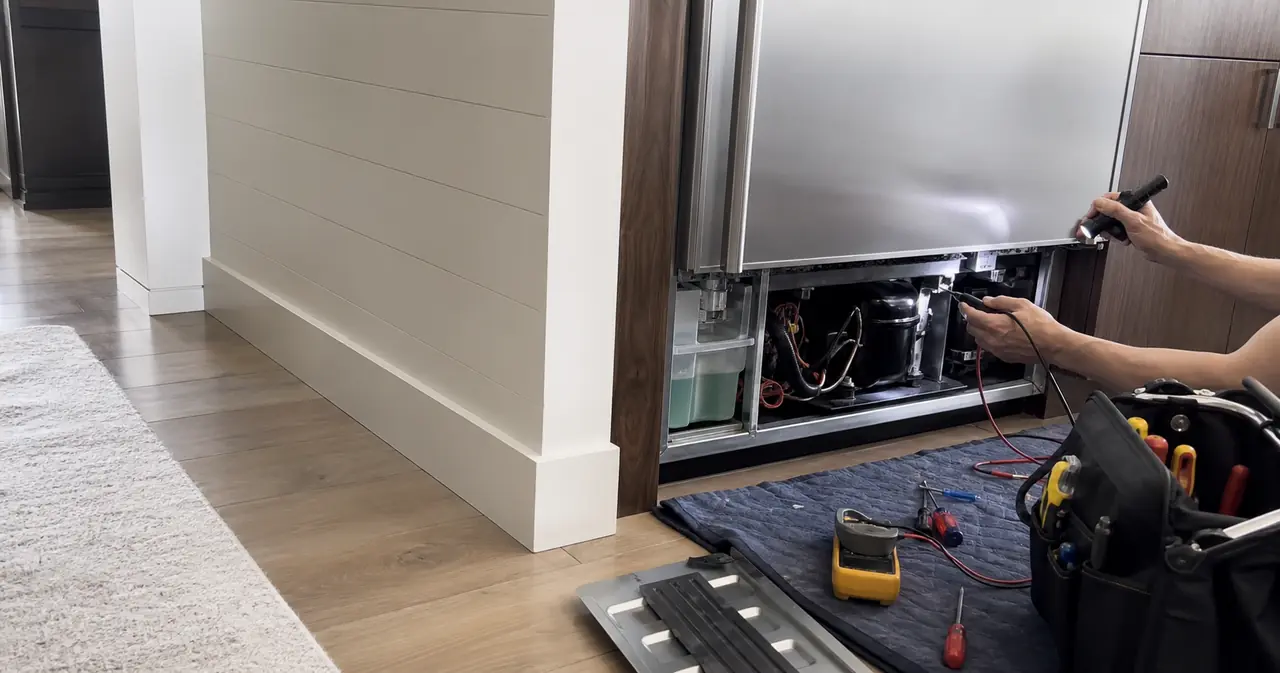
New noise from a Sub-Zero is unsettling precisely because these units are built to be quiet — and in the open-plan kitchens that define so many Silicon Valley homes, a fridge that suddenly buzzes or rattles carries straight across the great room and into every conversation. The good news is that most refrigerator noises are diagnosable from the sound itself. A buzz is not a rattle, a rattle is not a grind, and each points at a different part. The skill is matching the noise to its source before deciding whether it is a quick fix or a sign of something that should not wait.
Some sounds are simply a Sub-Zero working: a low hum as the compressor runs, a soft whoosh from the evaporator fan, an occasional gurgle as refrigerant settles, a periodic clunk-then-drop as the ice maker harvests a batch. What is worth attention is a noise that is new, getting louder, or coming from a unit that used to be silent. A bearing starting to fail in a fan motor, a compressor mount that has gone hard, or a fill valve buzzing against a restricted water line all announce themselves clearly if you know what to listen for.
There is a Santa Clara wrinkle here too. Plenty of local homes — the tech-money remodels around Pruneridge and Laurelwood, the newer Rivermark builds — keep wine in a Sub-Zero column or a dedicated cellar, and steady vibration is the enemy of a resting cork and a settling bottle. A fridge that has begun to drone or shudder is not just an annoyance in those houses; persistent vibration can disturb a collection, which is a reason to diagnose a new noise sooner rather than living with it.