
Wine storage guide · 5 min read
When a Sub-Zero wine column drifts warm in Santa Clara
Dual-zone drift, a failing zone sensor, a loaded condenser — the real reasons a built-in Sub-Zero wine column loses its hold in Santa Clara's warm, dry South Bay kitchens.
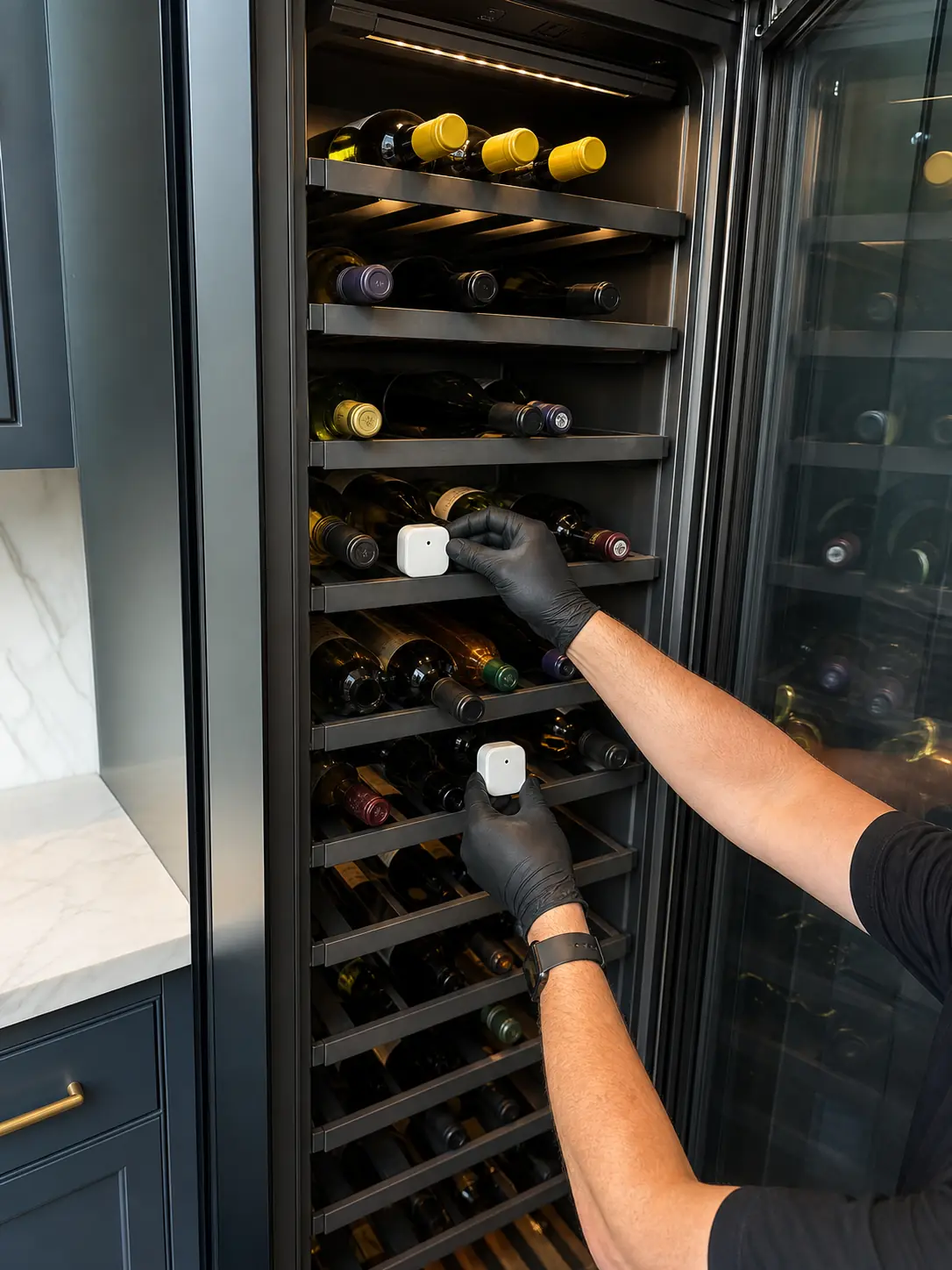
A wine column is the one appliance in the kitchen where a couple of degrees is the whole point. A Santa Clara collection — tech-money cellars in the new towers by Levi's Stadium, a long-held estate cabinet in an Old Quad home — is built around a unit holding its zones to the wine, not the room. So when a Sub-Zero wine storage unit starts creeping warm in our dry inland heat, it gets noticed fast, and the cause is usually narrower than the worry it sets off.
Dual zones, and why one half drifts first
Sub-Zero builds its wine storage as a sealed-refrigeration appliance with independent upper and lower zones — typically a cooler reds setting over a colder whites-and-sparkling band, each on its own sensor and damper. That split is also where most faults announce themselves. When one zone holds and the other climbs, the unit isn't failing as a whole; a zone sensor has drifted out of calibration or a damper isn't modulating, and the control is chasing a reading it can no longer trust.
The tell is a single zone wandering while its neighbor stays locked in. That points at the sensor, the damper, or the control logic between them — a bounded diagnosis — long before anyone needs to touch the compressor or the sealed loop.
Santa Clara heat, dust, and a working condenser
A wine column sheds its heat the same way a built-in refrigerator does — room air pulled across a condenser coil. In Santa Clara that air runs hot and dry through the long inland summer, and it carries the fine dust and seasonal pollen that drift through a South Bay kitchen with the windows open. Coat the coil and the compressor loses the margin it needs to hold a tight wine band, so the whole cabinet sags a degree or two on the hottest afternoons.
A gasket that no longer seals, or the UV-tinted glass door left slightly proud, lets warm room air leak past and forces the same fight. Before assuming the sealed system, we clean the condenser, confirm the door pulls firm all the way around, and check the evaporator fan — the airflow chain is where warm drift is found and fixed most of the time.
Vibration, sediment, and the repair-versus-replace call
Wine cares about more than temperature. A compressor mount gone hard or a fan starting to buzz adds vibration that, over months, disturbs the sediment in older bottles and quietly works a cork — reason enough to chase a new noise rather than live with it. Quiet, steady running is part of why a Sub-Zero wine unit earns its place.
On whether to fix or replace: a sensor, damper, fan, gasket or control board is a genuine-part repair on an appliance built to run well past a decade, and almost always the right call against swapping a built-in column out of custom millwork. The line moves only when a sealed-system failure meets real age — and we put the readings in front of you before you decide. Independent of the factory, the work is the same Sub-Zero standard either way.
Short answers
Questions & answers
Only one zone of my Sub-Zero wine unit is warm — is that bad?
Usually it's the better outcome. One zone drifting while the other holds points at that zone's sensor or damper, a bounded repair, not a whole-unit or sealed-system failure.
Why does my wine column struggle worse in summer here?
Santa Clara's dry inland heat plus dust and pollen load the condenser coil, so the compressor loses margin to hold a tight wine band. A coil cleaning and a gasket check usually restore it.
Should a noisy wine cooler be repaired even if it's still cold?
Yes — new vibration from a fan or compressor mount can disturb sediment and work a cork over time. Quiet running matters for wine, so a new noise is worth diagnosing.
Guides